


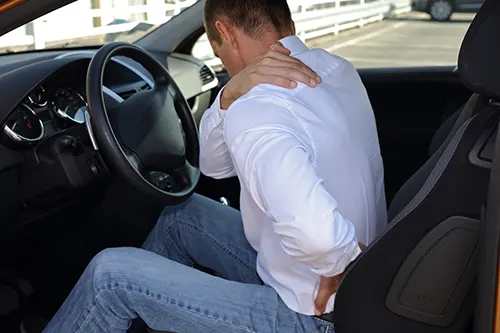
Common Reasons Back Pain Develops During Driving
- Sitting for extended periods places extra pressure on spinal discs
- Poor seat positioning can strain the neck and lower back
- Staying in one position too long causes stiffness and reduced circulation
- Tight hip muscles may increase stress on the lumbar spine
- Slouching while driving affects spinal alignment
- Constant road vibration may aggravate sensitive spinal nerves
- Existing problems like sciatica or disc injuries can become more painful
Spending hours behind the wheel can place significant stress on your spine, especially the lower back. Remaining seated for long periods increases pressure on the spinal discs, limiting movement and making it easier for stiffness and discomfort to develop. Many people notice soreness or difficulty standing upright after a long trip because the spine has been compressed for an extended time.
Poor posture while driving can also contribute to back pain. Drivers often lean forward, hunch their shoulders, or sit without enough lower back support. These habits place additional strain on the muscles and joints surrounding the spine. Over time, tightness can develop in the hips and lower back, making discomfort even worse after driving.
Individuals who already suffer from conditions such as sciatica, herniated discs, or bulging discs may experience stronger symptoms during long drives. Extended sitting may irritate nearby nerves, leading to pain, tingling, or numbness that can travel into the hips or legs.
How Spinal Decompression Therapy May Help
- Helps reduce pressure on spinal discs
- May relieve irritation affecting nearby nerves
- Encourages healthy circulation to spinal tissues
- Supports recovery from chronic lower back discomfort
- Non-invasive option for disc-related pain management
Spinal decompression therapy gently stretches the spine using controlled movements designed to reduce compression between the vertebrae. By creating more space within the spine, pressure on discs and nerves may decrease, helping relieve discomfort caused by prolonged sitting and driving.
Improved circulation is another important benefit of decompression therapy. Better blood flow allows nutrients and oxygen to reach strained spinal tissues more effectively, supporting the body’s natural healing process and helping reduce stiffness over time.
For patients dealing with nerve-related symptoms, spinal decompression may also help lessen radiating pain that travels into the hips or legs. Reducing pressure around the spine can ease irritation and improve mobility.
At Village Family Clinic, spinal decompression therapy may be included in a personalized treatment plan for patients experiencing back pain from long drives, prolonged sitting, or disc-related conditions. Treatment plans are designed around each patient’s individual needs to help improve comfort and mobility.
Contact Village Family Clinic today to learn more about treatment options for back pain relief!